The History of Varanasi’s Bharwa Lal Mirch Achar: A Century-Old Tradition
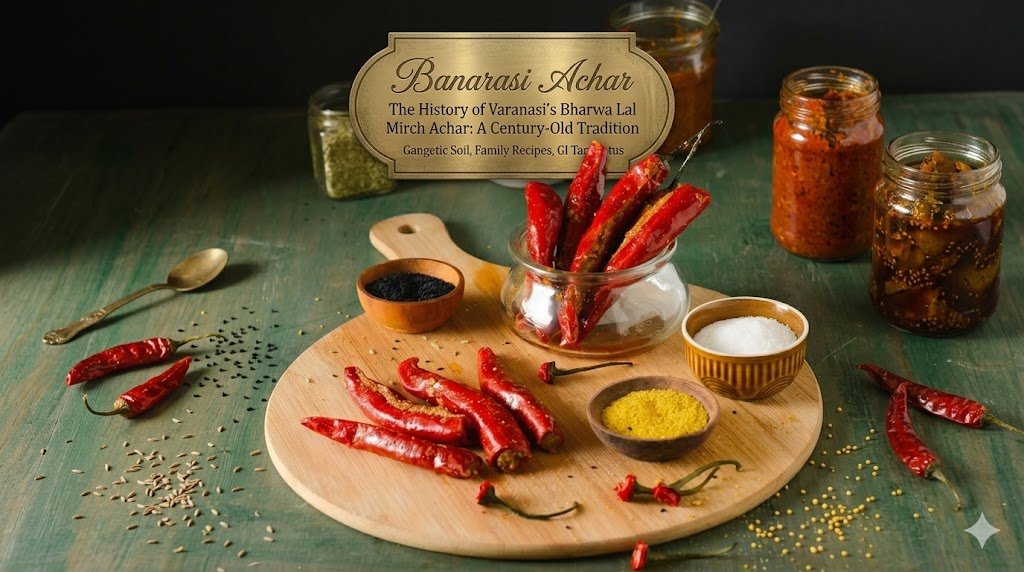
Preserving the culinary soul and traditions of ancient Kashi.
To walk through the narrow, high-walled alleys of old Varanasi in the late winter months is to experience a sensory shift. As the crisp February air sweeps across the Gangetic plains, a sharp, deeply comforting aroma begins to dominate the city’s residential courtyards. It is the unmistakable scent of Kacchi Ghani (cold-pressed) mustard oil blooming under a warm sun, mingling with the tangy notes of sun-dried mango powder, fennel, and roasted fenugreek.
This is the season of the King of Indian Pickles: the authentic Banarasi Lal Mirch Bharwa Achar (Stuffed Red Chili Pickle).
Far from being a mere condiment, this deep-crimson delicacy represents over a century of agricultural adaptation, matriarchal food preservation, and slow-food philosophy. It is a living culinary tradition that recently received its official crown: the Geographical Indication (GI) Tag, legally cementing its status as an irreplaceable piece of India’s culinary heritage.
The Agricultural Root: The Birth of a Local Cultivar
The story of the Bharwa Mirch does not begin in the kitchen, but in the unique alluvial soil of the Varanasi and Mirzapur agricultural belts. The chili used for this legendary pickle is a distinct local variant of Capsicum annuum.
[ Gangetic Alluvial Soil + Intense Late-Winter Sun ]
│
▼
[ Thick-Fleshed, Broad-Shouldered Banarasi Red Chili ]
Unlike the slender, high-heat chilis found across southern India, the Banarasi red chili evolved to be broad-shouldered, plump, and remarkably thick-fleshed. When left to mature fully on the vine into late January, it turns a vibrant, deep crimson.
Its physical structure is a biological marvel perfectly suited for pickling:
-
The Hollow Core: The chili develops a spacious interior cavity, allowing it to hold a massive payload of aromatic spices.
-
The Thick Walls: The fleshy skin acts as a sturdy structural wrapper. It can withstand being cored, stuffed tightly with coarse masala, and drenched in oil without tearing or turning mushy.
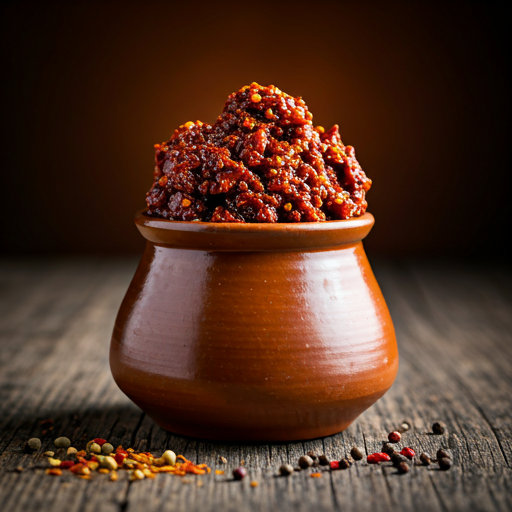
"The very same sun-curing traditions born in the open courtyards of old Kashi are alive in our kitchen today."
Banarasi Bharwa Lal Mirch Achar (Stuffed Red Chilli Pickle)
₹180 (250g)The Ceramic Terrace Culture: Architecture Meets Biochemistry
Historically, the evolution of Varanasi's pickling tradition is deeply intertwined with the architectural layout of the region's old ancestral homes. The traditional Aangan (open-sky inner courtyard) and the expansive stone terraces (chhat) were not just social spaces—they were active biochemical laboratories.
Before the advent of industrial refrigeration and chemical preservatives like sodium benzoate, the matriarchs of Kashi relied on a combination of three natural shields: Salt, Solar Heat, and Anaerobic Curing.
               [ Traditional Sun-Curing Matrix ]

       +-------------------+       +--------------------+
       |  CERAMIC MARTABAN |       | NATURAL SUNLIGHT   |
       | Blocks moisture & | +---+ | Drives slow lactic |
       | stabilizes acid   |       | acid fermentation  |
       +-------------------+       +--------------------+
                 │                           │
                 +-------------┬-------------+
                               │
                               ▼
                +------------------------------+
                |   12-MONTH SAFE SHELF LIFE   |
                |   Zero Preservatives Needed  |
                +------------------------------+
Once the chilis were cored and stuffed with a hand-blended mix of amchoor (dried mango powder), coarse saunf (fennel), rai (mustard seeds), and kalonji, they were packed tightly into heavy, glazed white-and-brown ceramic jars known as Martabans.
These martabans were placed meticulously on the stone terraces for three to four weeks. The intense spring sun initiated a slow, natural lactic acid fermentation. The heat gently broke down the sugars in the chili's thick skin, softening it to a melt-in-the-mouth texture while developing a complex, smoky sourness that synthetic chemical vinegar can never replicate.
The Master Spice Blend: A Centuries-Old Balance
The traditional stuffing matrix is a masterclass in flavor balancing, passed down orally through generations of Banarasi households. Each ingredient serves a strict culinary and functional purpose:
-
Amchoor (Sun-Dried Mango Powder): Provides the upfront, aggressive tanginess that cuts through the heat of the chili.
-
Kacchi Ghani Mustard Oil: The lifeblood of the pickle. Pungent and sharp, it seals the chili away from oxygen, acting as a foolproof biological barrier against spoilage.
-
Fennel (Saunf) & Mustard Seeds (Rai): Ground coarsely to provide a robust texture and an aromatic, sweet-and-sharp contrast.
Preserving the Gold Standard in the Modern Era
In an era dominated by mass-manufactured, factory-made pickles—where chilis are artificially boiled to speed up production and soaked in synthetic acids—the authentic Banarasi Bharwa Achar is an act of cultural preservation.
Choosing a traditional, small-batch, sun-cured stuffed red chili is more than an upgrade for your dal-chawal or paratha; it is a direct line to a century of patience, craftsmanship, and the unmatched culinary soul of Kashi.
FAQs
What makes the Banarasi Red Chili variety different from other red chilis?
The local Banarasi red chili variant grown in the Varanasi-Mirzapur alluvial belt has exceptionally thick skin walls and a plump, broad-shouldered hollow cavity. This specific physical structure allows it to comfortably hold a heavy spice stuffing without tearing or turning soggy during the extensive sun-curing process, unlike thinner south Indian chilis.
Why does authentic Banarasi Bharwa Achar have an official GI Tag?
The Geographical Indication (GI) tag is a legal protection granted because the unique combination of the Gangetic regional climate, local soil conditions, and the traditional hand-stuffing and sun-curing methodologies cannot be replicated anywhere else. It guarantees the consumer that they are buying an authentic heritage product native to Varanasi.
How long can a traditional sun-cured pickle last without artificial preservatives?
Because we use authentic, slow sun-curing and unrefined kacchi-ghani mustard oil, our pickles naturally preserve themselves and stay completely fresh for up to 12 to 24 months. The pure mustard oil acts as a natural anaerobic barrier that entirely seals out moisture, bacteria, and mold.